Wood TV Stands
Solid wood media consoles in warm, natural finishes.


-
A wood TV stand does the one thing a black screen and a wall of electronics cannot: it makes the media wall feel like furniture. Grain, warmth and weight turn the biggest setup in the room into its anchor, and wood is the most forgiving material under a television — it shows dust less than gloss, shrugs off the daily traffic of remotes and game cases, and pairs with nearly every floor and fabric you already own. The KFROOMS wood range runs from a 54-inch apartment console to a 90-inch wall-length stand, across pine, mango, walnut, elm and oak, in finishes from pale natural tones through warm browns to grey- and black-stained wood. Every stand below is wider than the TV it is sized for, with closed or concealed storage wherever the design calls for it.
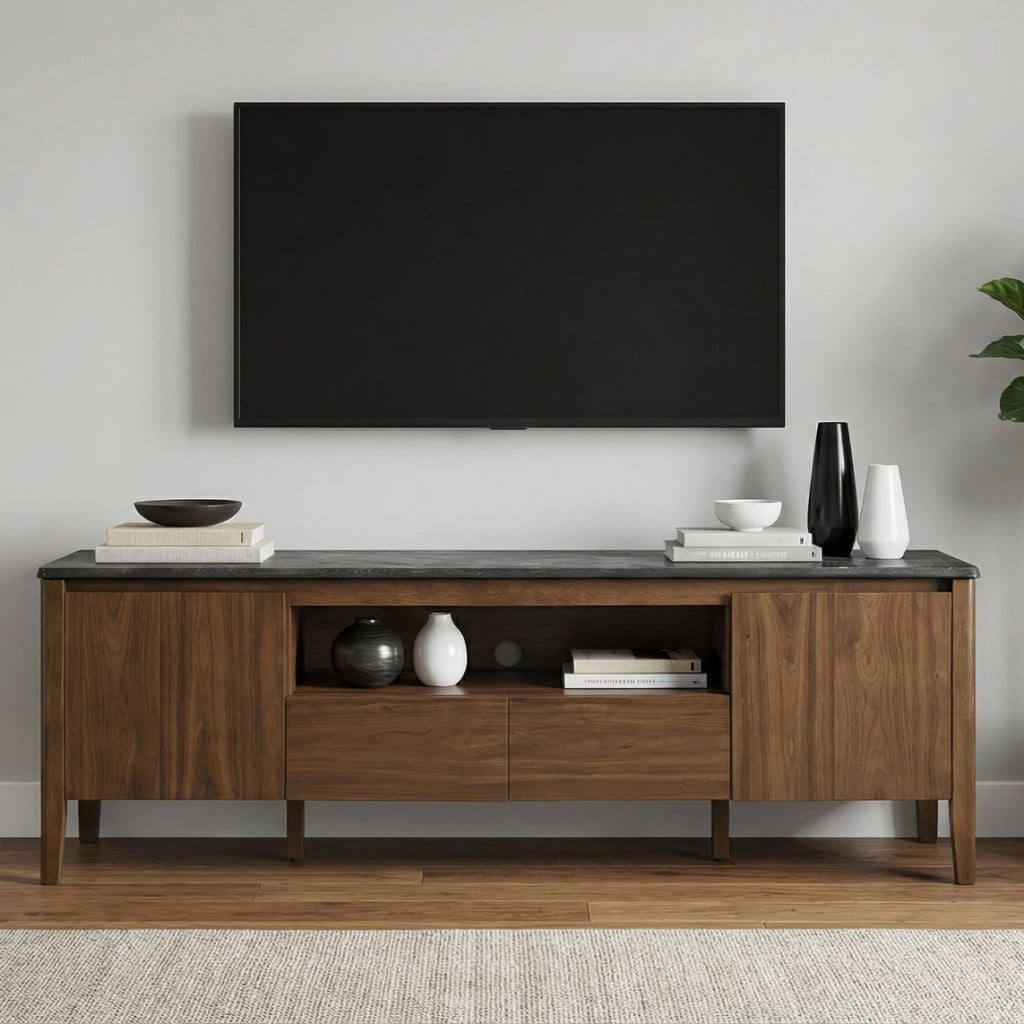
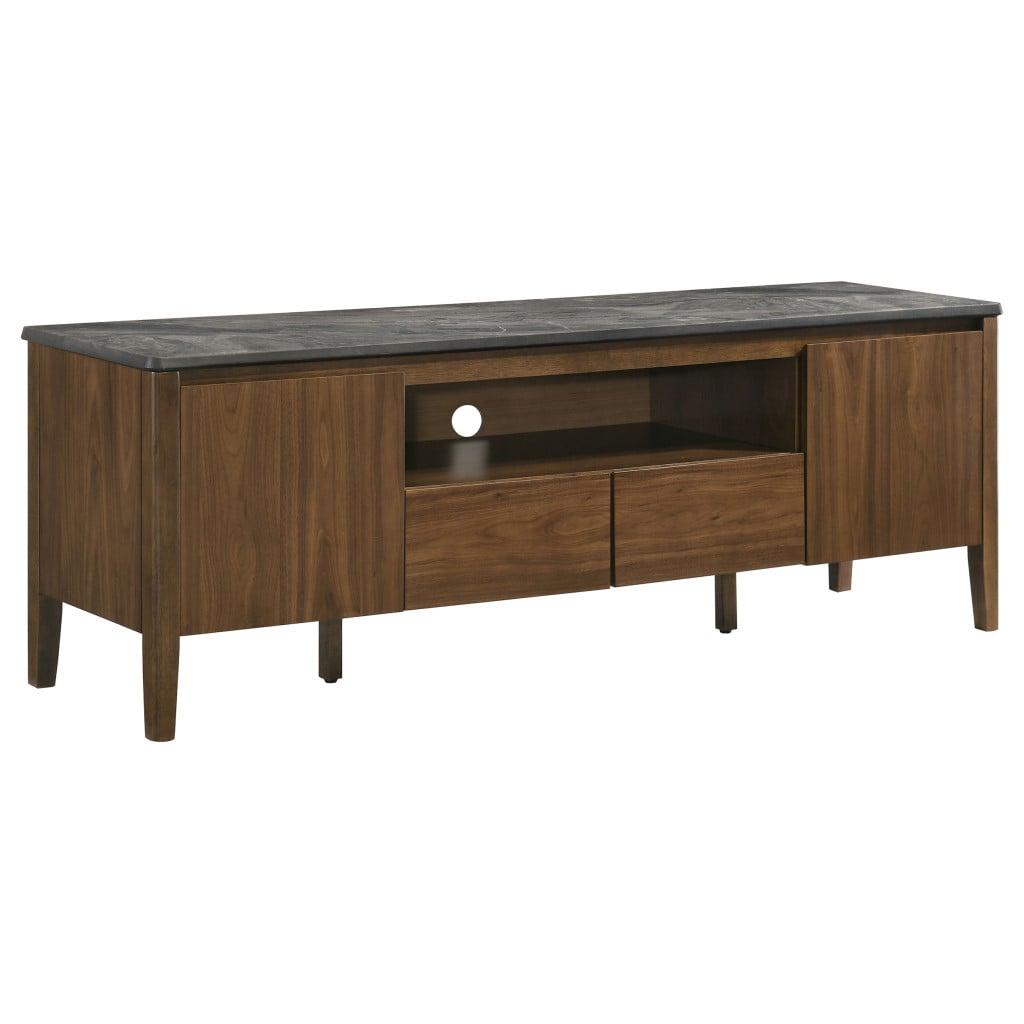
Five woods do the work on this page, and they do not behave alike. Pine is the warm value wood: the Sedona, Sachin and Madra wear it in dark and distressed finishes that read rustic-modern and hide wear gracefully. Mango is the character wood — a fast-growing hardwood with dramatic, swirling grain, worn here in warm honey-brown tones by the Tabby, Cartmill, Otto and Trask. Walnut is the rich one: deep brown, fine-grained, and formal enough for a dining-room-adjacent living room — the Valna wears it as a veneer over its sliding doors. The light woods — light elm on the Marcelo, light oak on the One Coastal, pale granola tones on the Dorsey — brighten a room and lean Scandinavian. And at the modern end, stained wood keeps the grain and drops the color: basalt grey on the Oxford, jet black on the Elora. Choose by undertone first: warm woods (pine, mango, walnut) want warm floors and fabrics; the grey and black stains pair with cool, contemporary rooms.
The rule does not change with the material: your stand should always be wider than your TV, with at least two to three inches of breathing room on each side. A 65-inch TV measures roughly 57 inches wide, so the 60-inch Sedona is the tightest comfortable fit in this range and the 64-inch Sol gives you margin to spare. For an 85-inch TV — about 75 inches wide — you need a true wide body: the Tabby is built for 85-inch screens at 79 inches, and the Langley goes all the way to 90 inches, the widest wood stand we carry. Wood stands reward going wide, because a long grain run is the whole point of the material — a stand that barely clears the screen wastes it. Measure the TV itself, not the diagonal on the box, before you commit.
Honestly: it matters less under a TV than almost anywhere else in the house, and this range mixes all three. Solid wood can be sanded and refinished for decades, but it also moves with humidity and can warp in the heat that components vent behind a cabinet. A quality veneer — real walnut or mango laid over a stable core — stays flatter, resists that heat cycle, and shows the same grain, which is why so many wide stands are built that way. Engineered wood with a wood finish, like the Sedona’s dark pine surface, is the wipe-clean value option. What actually matters under a screen is that the top stays level, the doors hang true, and the finish survives a warm cable box — read the individual product pages for each stand’s construction, and do not pay a solid-wood premium for a job that stability does better.
Choose by what you want the wall to feel like. A wood stand brings visible grain and warmth, and it forgives: dust that would shout on a gloss-black top and fingerprints that would smear a white lacquer front both disappear into a mid-tone grain. A painted stand — gloss white, matte black — reads cleaner and more architectural, but it shows everything and commits the room to a color story. Wood is also the great mediator of furniture: because most rooms already mix wood tones in floors, frames and tables, a wood stand bridges pieces that a painted stand would fight. If your room is mostly cool greys and chrome, a grey- or black-stained wood stand gives you the modern read with the grain still in it. If the room feels cold or echoey, natural wood is the fastest warm-up there is.
The whole program is a soft cloth and five minutes. Dust with a microfiber cloth — mid-tone wood hides dust between cleanings better than any gloss finish, but the top surface under a TV still gathers it. Use coasters and felt pads: drinks sweat, and components have feet. Keep a wood stand out of harsh, all-day direct sun where you can, because strong UV warms and fades finishes unevenly over the years, one side at a time. Wipe spills promptly — a wood finish tolerates a splash, not a puddle left through a movie. And give the components behind the doors their airflow: leave a little clearance at the back panel so heat escapes, and any of these woods will outlast the television sitting on it.
| Model | Width | Style notes | Storage | Best for |
|---|---|---|---|---|
| Langley 90-Inch TV Stand in Autumn Forest Brown Wood | 90 in | Warm brown wood, long low profile | — | The widest screens and wall-length setups |
| Valna 71-Inch TV Stand with Sliding Doors in Walnut | 71 in | Walnut veneer, sliding door panels | Concealed behind sliding doors | Tight walkways — doors glide, never swing |
| Sedona 60-Inch Mid-Century TV Stand in Dark Pine | 60 in | Mid-century slatted door fronts in dark pine | Concealed storage behind doors | 65-inch TVs and warm mid-century rooms |
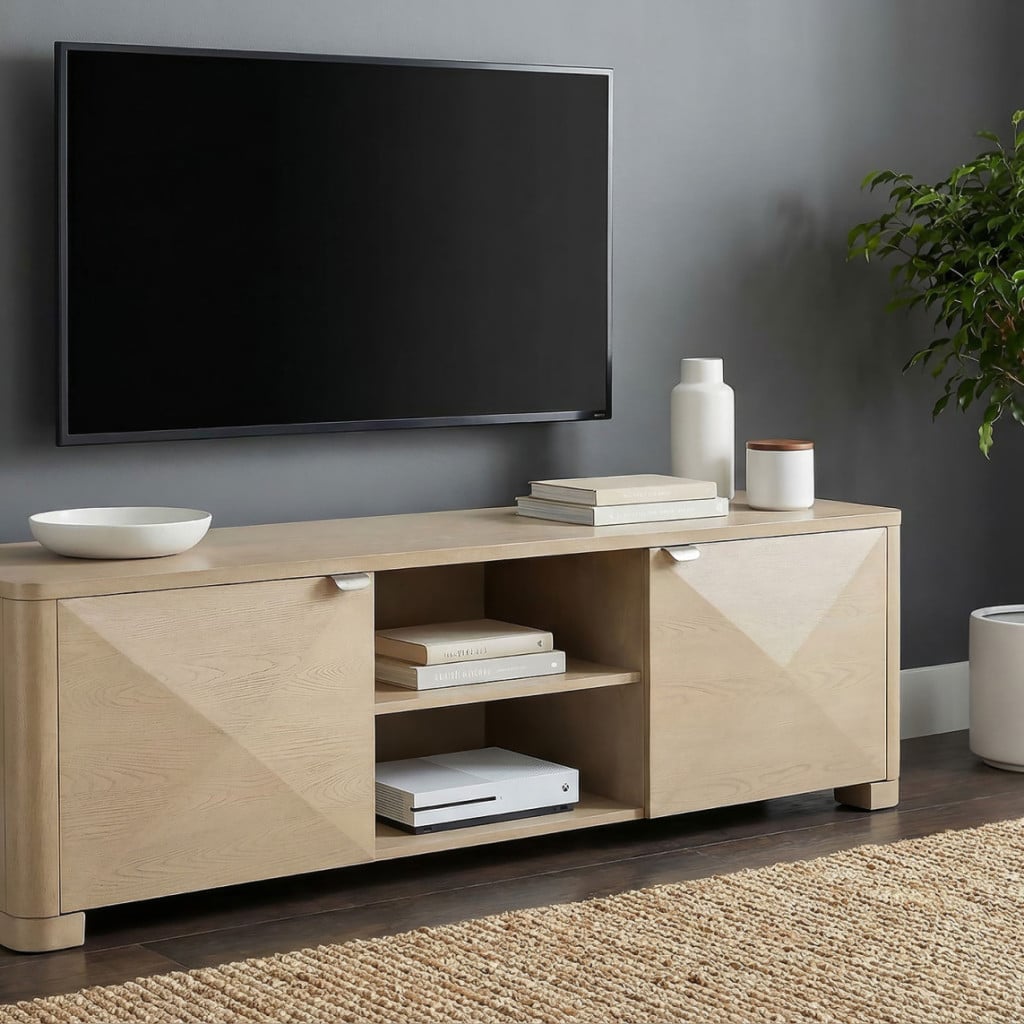
| Marcelo 71-Inch TV Stand with Geometric Doors in Light Elm | 71 in | Light elm with geometric door fronts | Concealed cabinets behind doors | A light-wood statement piece |
| Sachin 79-Inch 4-Door TV Stand in Dark Pine | 79 in | Dark pine, four-door front | Four-door closed storage | Big width on a value budget |
| Dorsey 72-Inch Woven TV Stand in Light Granola Wood | 72 in | Light granola wood, woven door fronts | — | Texture and light natural tones |
Best for the biggest TVs: the Langley 90-Inch TV Stand in Autumn Forest Brown Wood — at 90 inches it is the widest wood stand here, and a grain run that long turns a big screen into a deliberate composition instead of an apology.
Best for 85-inch TVs: the Tabby 79-Inch TV Stand for 85-Inch TVs in Mango — it is built for 85-inch screens, and the warm mango grain keeps a very large piece from feeling like a slab.
Best light wood: the Marcelo 71-Inch TV Stand with Geometric Doors in Light Elm — the carved geometric fronts give pale wood its sculptural moment, and elm keeps the whole wall bright without going white.
Best for hiding components: the Elora 78-Inch TV Stand in Jet Black Wood — 78 inches of closed storage in a black-stained finish that disappears under a big screen, with every box, console and cord behind closed fronts.
Best budget pick: the Elkton 59-Inch 2-Drawer TV Stand in Mango — real mango wood and two drawers at the gentlest price on this page; the honest way into the material if the wide bodies are more stand than you need.
A 65-inch TV is about 57 inches wide, so your stand should be at least 60 inches wide — and wider is always safer. In this range, the 60-inch Sedona is the tightest comfortable fit, and the 64-inch Sol or Oxford gives you the margins that make the setup look intentional. Going narrower makes the TV look like it is about to tip off the edge, whatever the wood.
Pine is the softest wood on this page, and honestly, yes — it dents more readily than walnut or mango if a remote lands corner-first. That is exactly why so much of the pine here wears dark or distressed finishes: the worn surface makes new marks disappear into the pattern. Use felt pads under components, and a pine stand ages gracefully instead of looking battered; if your household is hard on furniture, walnut and mango are the tougher seats at this table.
A veneer is a thin layer of real wood — real walnut, real mango — bonded to a stable manufactured core; solid wood is the same species all the way through. Veneer is not fake wood: the surface you see and touch is genuine grain. Under a TV, veneer has a practical edge — the core resists the warping that heat and humidity can work on solid boards — while solid wood wins on refinishing: it can be sanded back and re-stained for decades. This range carries both; each product page states its construction.
Usually not, if you match undertones instead of shades. Warm wood floors (honey, amber, mid-brown) want a warm stand — pine, mango, walnut; cool or grey-washed floors want the grey-stained Oxford or a pale elm. Aim for the stand to sit a shade or two darker or lighter than the floor rather than exactly on it, and let a rug break the two up. The clash to avoid is warm-against-cool: an orange-toned stand on a grey floor fights from across the room.
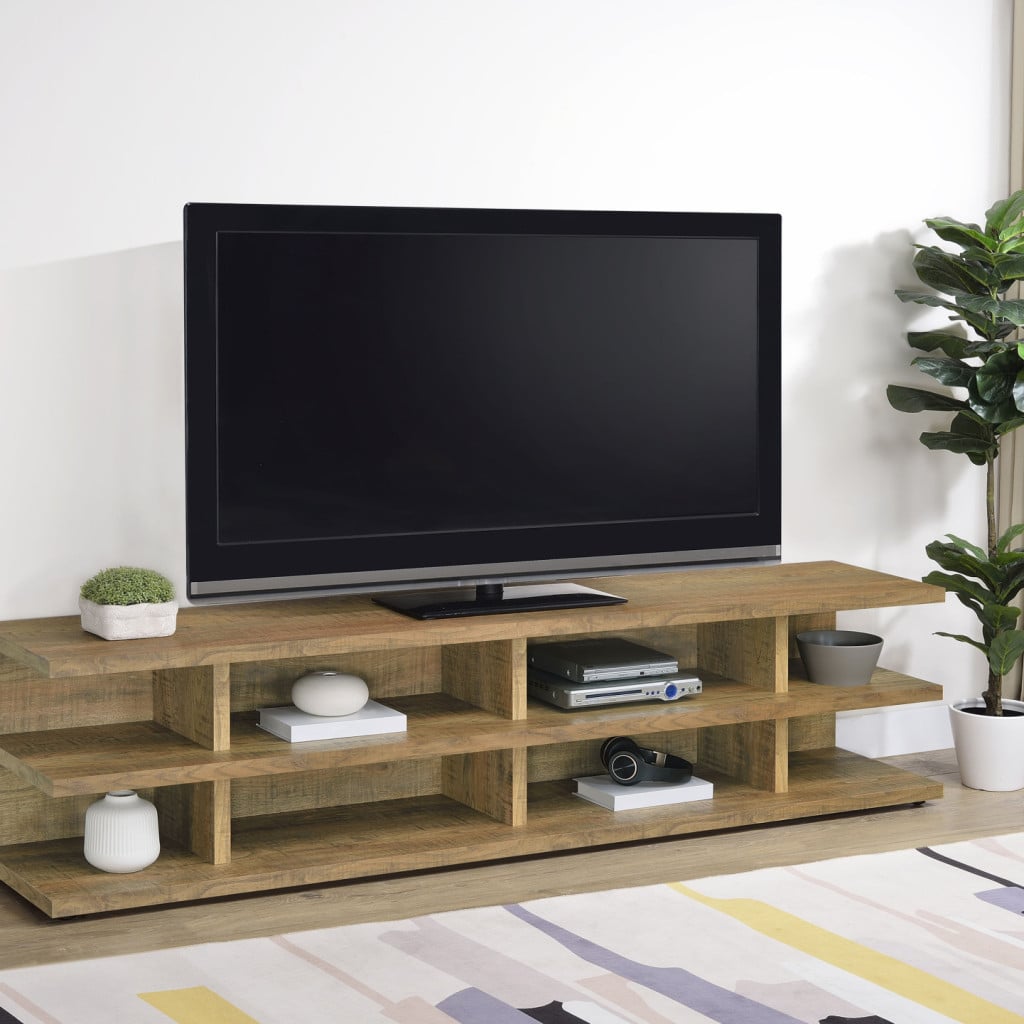
The wood is not what hides them — the closed fronts are. Doors and drawers swallow the cable box, the console and the blinking lights entirely, and the widest stands here give you the longest closed run to work with. Route cords through the rear of the cabinet, keep the power strip inside the closed section, and from the sofa there is nothing to see but grain. Open-shelf wood stands show components just like any open stand; if hiding is the goal, shop the closed-storage rows of the table above.
Yes — wood is arguably the modern room’s best material, because it warms the clean lines that can otherwise read cold. The trick is the finish: grey-stained wood like the basalt Oxford and black-stained wood like the jet-black Elora keep the grain and drop the rustic signals entirely. Pair them with flat fronts, minimal hardware and an uncluttered top, and a wood stand reads as contemporary as anything in gloss — with better dust manners.
Start wide with shop all TV stands, or compare the style-first sibling page, modern TV stands. Build the rest of the room from living room furniture: coffee tables — including natural wood coffee tables in the same material story — plus console tables and cabinets for narrow walls. Seat it with sectionals, sofas, loveseats & chairs, modern recliner sofa options and accent chairs, flank the wall with bookcases, and check the living room sale before you check out.